
Meals per day#
Feed three to four smaller meals a day until about six months old, then move to two meals as your puppy grows and their stomach can hold more at once.
Consistent meal times help with digestion and also make house-training easier, since puppies tend to need the toilet shortly after eating.
Balance matters#
Puppies need the right calcium and phosphorus balance to support strong, evenly developing bones, particularly during their fastest growth phases. This is one area where a homemade or improvised diet can easily fall short.
Use complete meals specifically designed for growth rather than an adult recipe, especially for larger breeds, where bone and joint development takes longer and is more sensitive to imbalance.
Treats in moderation#
Treats should stay below about 10% of daily food intake so they don't crowd out balanced nutrition or lead to excess weight gain. Soft organic cookies make great training rewards because they're easy for small mouths to chew and quick to eat.
Break treats into small pieces during training sessions, especially with puppies who are still learning — lots of tiny rewards work better than a few big ones.
When to call your vet#
Persistent diarrhoea, vomiting, a swollen belly, reluctance to eat, or very slow weight gain should all be checked promptly, as puppies can become unwell more quickly than adult dogs.
Vaccination and worming schedules also affect diet timing, so it's worth coordinating feeding changes with your vet's visits.
How Organic Dog Chef can help#
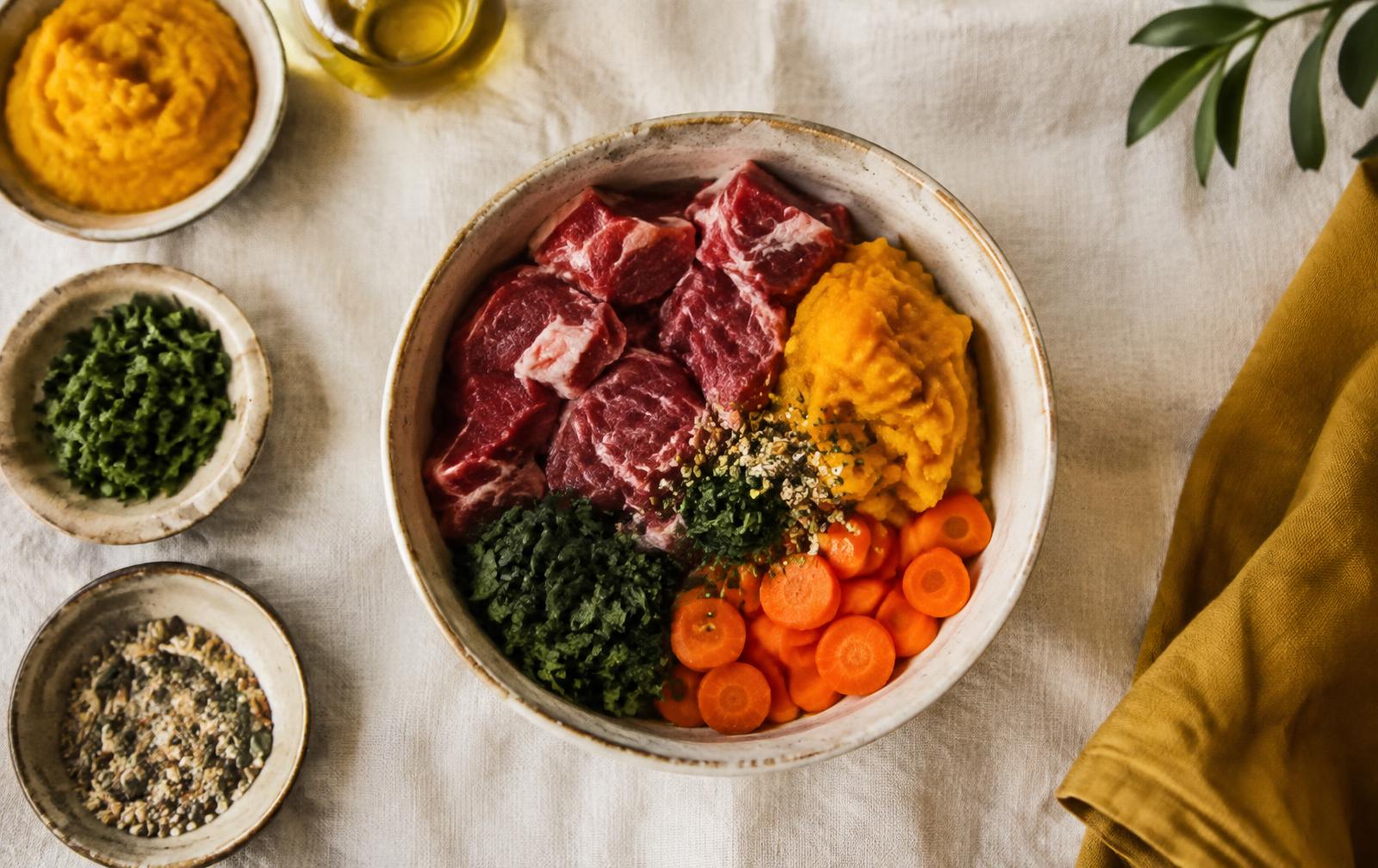
We offer complete raw meals formulated for growth, sized for puppies of different breeds, and our team can help you plan portions as your puppy grows month by month.