

Water everywhere#
Keep fresh, cool water available at home in more than one spot, and always carry water with you on walks, even short ones, during the hottest months.
Change water more often in summer, since it warms and can become less appealing to drink, which may lead a dog to drink less than they actually need.
Moist food helps#
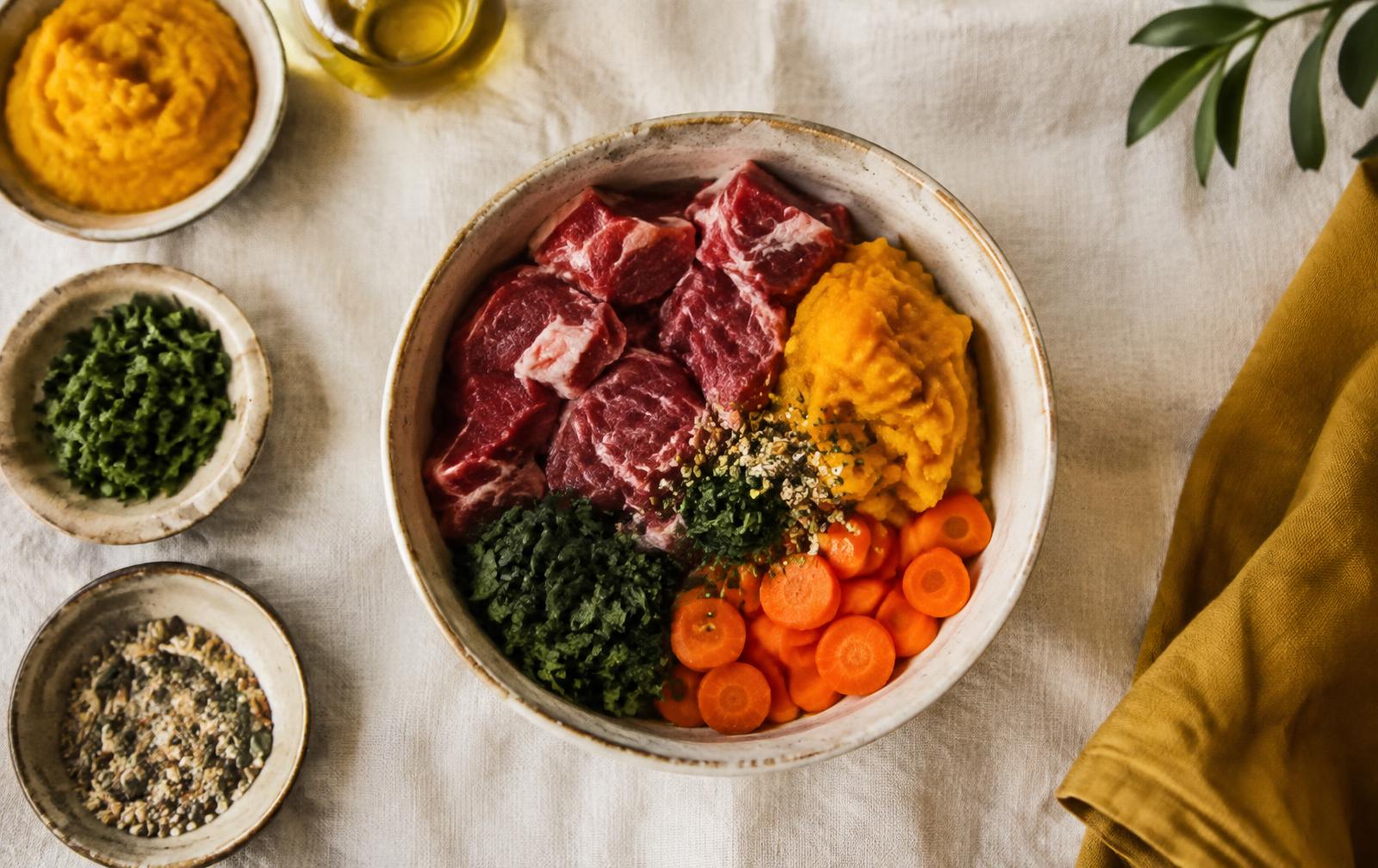
Raw meals are around 70% water, which contributes meaningfully to a dog's daily fluid intake alongside drinking water, especially useful during the hottest stretches of summer.
Adding a splash of water to meals, or offering a frozen treat, can also encourage extra fluid intake on very hot days.
Walk smart#
Walk early in the morning or later in the evening when the pavement and air have cooled down. Test the pavement with the back of your hand for five seconds; if it's too hot for you, it's too hot for your dog's paws.
Flat-faced breeds, senior dogs, overweight dogs and dogs with thick coats are especially vulnerable to overheating and need extra caution during summer months.
When to call your vet#
Excessive panting, drooling, weakness, vomiting, disorientation or collapse are signs of heatstroke and need emergency vet attention immediately — this is a genuine emergency, not something to wait out at home.
If you suspect heatstroke, move your dog to shade or a cool area straight away and contact your vet while you arrange cooling.